The Solution Contract is a repair service plan that supports the portable instrument’s hardware and firmware up to contract period.
Extend the life of your lifesaving instruments with Relevant process solution Maintenance Contract, a repair service that supports the instrument's hardware and firmware over a contract period.
1. What Is a Maintenance Contract?
- A maintenance contract outlines the terms and conditions associated with work related to repair, service, or upkeep.
- By formalizing this agreement, both parties—whether service providers or clients—align their expectations.
- Maintenance contracts are common in various industries, from building maintenance to equipment servicing.
2. Key Components of a Maintenance Contract:
- Scope of Work: Clearly define the services to be provided (e.g., routine maintenance, emergency repairs, inspections).
- Duration: Specify the contract period (e.g., monthly, annually).
- Payment Terms: Outline payment details (e.g., fixed fee, hourly rate, payment schedule).
- Responsibilities: Clarify who is responsible for materials, labor, and any additional costs.
- Termination Clause: Address how either party can terminate the contract.
- Warranties and Guarantees: Include any warranties on workmanship or materials.
3. Common Types of Maintenance Contracts:
- Preventive Maintenance Contracts: Regularly scheduled maintenance to prevent breakdowns.
- Corrective Maintenance Contracts: Addressing specific issues or repairs as they arise.
- Full-Service Contracts: Comprehensive coverage for all maintenance needs.
- Limited Contracts: Focused on specific tasks or areas.
4. Benefits of Maintenance Contracts:
- Predictable Costs: Clients know what to expect financially.
- Timely Service: Regular maintenance minimizes downtime.
- Peace of Mind: Service providers commit to quality work.
- Long-Term Relationships: Contracts foster on going partnerships.
Remember, a well-crafted maintenance contract is like a handshake between reliability and peace of mind—it keeps everything running smoothly
Gas detector calibration is a critical process to ensure the accuracy and reliability of gas monitors. Let’s break it down:
1. Bump Test:
-
A bump test is a quick qualitative check. During this test:
- Sensors are exposed to gas at a concentration and duration sufficient to activate alert or alarm indicators.
- The goal is to assess sensor response and verify that the equipment is functioning.
- It doesn’t check sensor accuracy; it only ensures the sensor is operational.
- Known calibration gas isn’t necessary; common unmeasured gas sources can suffice (e.g., running a gasoline engine for carbon monoxide detectors).
- Timely Service: Regular maintenance minimizes downtime.
- Peace of Mind: Service providers commit to quality work.
- Long-Term Relationships: Contracts foster on going partnerships.
2. Calibration Check:
- A calibration check is a quantitative test using a known concentration of gas.
- Steps:
- Establish a reference point in clean air (usually zero for most toxic and combustible gases).
- Apply a known concentration of test gas to the sensor (ideally triggering an alert or alarm state).
- If the reading falls within an acceptable range of the test gas concentration, the calibration is valid.
- Otherwise, recalibration is needed.
- Peace of Mind: Service providers commit to quality work.
- Long-Term Relationships: Contracts foster on going partnerships.
3. Recalibration:
- Recalibration adjusts sensor response to achieve a desired value based on a known concentration of test gas.
- Regular calibration ensures accurate gas detection and reliable safety monitoring.
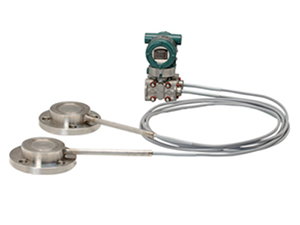
- Relevant process solution having Seal diaphragm with SS316, SS316L, Hastelloy C, with PTFE & FPA Liner, & Tantalum MOC.
- A diaphragm seal pressure transmitter is a device used to measure pressure in process systems while protecting the sensor from harsh conditions. Here's a brief overview:
- Diaphragm Seal: A barrier made of flexible material that isolates the pressure sensor from the process fluid.
- Pressure Transmission: The process pressure is transmitted through the diaphragm to a fill fluid, which then transfers the pressure to the sensor.
- Applications: Commonly used in industries where the process fluid is corrosive, viscous, or contains solids that could damage the sensor.
- This setup ensures accurate pressure measurement while extending the lifespan of the pressure transmitter
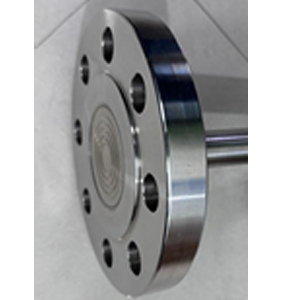
1. Flush flange seal
A flush type of seal is a type of diaphragm seal where the diaphragm is flush with the surface of the process connection. This design minimizes the risk of clogging and ensures a more accurate pressure measurement, especially in applications involving highly viscous, corrosive, or crystallizing fluids.
Diaphragm Seal. This type consists basically of a flange whose dimensions match those of corresponding standard Seal are located at the center of the flange and bottom mounted.
2. Flange seal with extended Diaphragm.
A flange seal with an extended diaphragm is a sophisticated device used to protect pressure measuring instruments, especially in harsh or challenging process environments. Here’s what makes it stand out:
- Extended Diaphragm: The diaphragm extends beyond the flange, offering superior isolation from the process fluid. This helps in maintaining the integrity of the measurement and protecting the sensor from aggressive media.
- Material Options: The diaphragm and flange are often made from materials like stainless steel, Hastelloy, or other alloys, depending on the compatibility with the process fluid.
- Applications: Widely used in industries such as chemicals, pharmaceuticals, and food processing, where cleanliness and accuracy are paramount.
This type of seal ensures accurate pressure readings while safeguarding the sensor, making it indispensable in critical industrial applications

3. Capillary Type Flush Flange Remote Seal
A capillary type flush flange remote seal is designed to isolate the pressure sensor from the process media while maintaining accurate pressure measurement. This type of seal is particularly useful in applications involving corrosive, viscous, or high-temperature fluids. The flush diaphragm ensures there are no cavities where the process fluid can collect, preventing clogging and ensuring hygiene. The capillary tube filled with a transmitting fluid connects the diaphragm to the pressure transmitter, allowing for remote measurement.
- Applications: Commonly used in chemical, pharmaceutical, and food processing industries.
- Materials: Often made from stainless steel, Hastelloy, or other corrosion-resistant materials.
- Benefits: Provides accurate pressure measurement, prevents clogging, and protects the sensor from aggressive media.
This setup ensures reliable and precise measurements while extending the lifespan of the pressure transmitter in challenging environments.